Leadership Lessons from the World Cup — 2nd Edition


In the first edition of Leadership Lessons from the World Cup, I wrote about following Spain through eight matches, six cities and two countries all the way to the World Cup Final—and the leadership lessons I saw in the team along the way.
But this story is about something different.
It's about the part before you know whether all the effort is actually going to lead anywhere.
If you've ever worked hard toward something you deeply wanted—a job, a business, a career change, a relationship, a dream—and had no idea whether you were getting any closer, you know that feeling.
Before this World Cup, I was never really a sports fan. I understood enjoying a game. I didn't really understand why people traveled thousands of miles, sang until they had no voice, cried over players who didn't know their names, or said “we won” when they had never stepped onto the field.
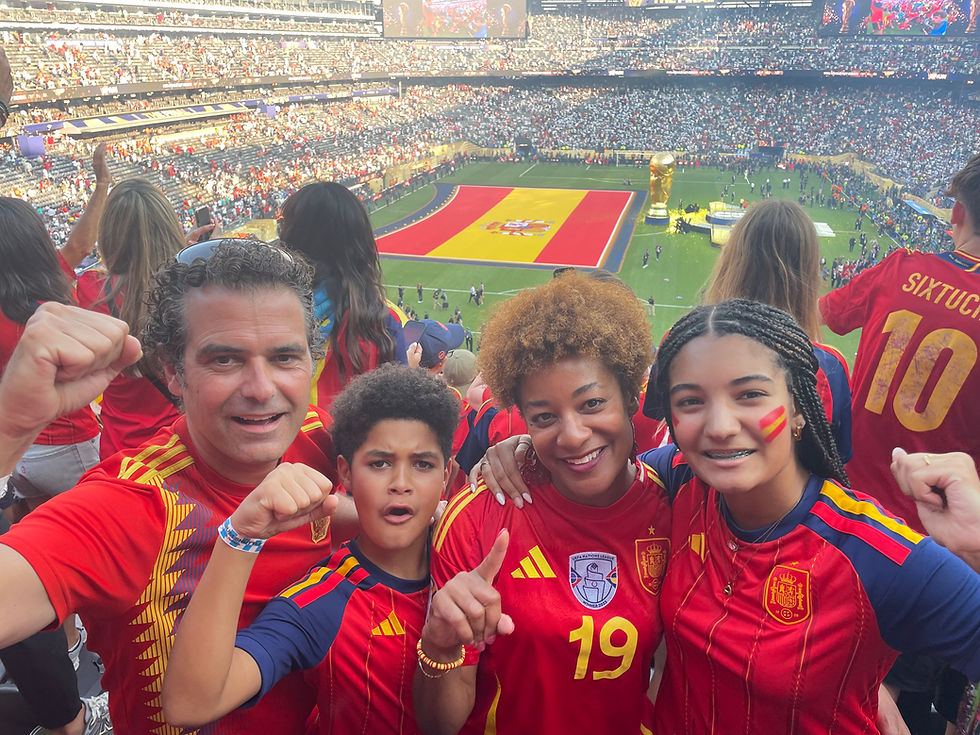
Six weeks traveling with one of Spain's official supporters' clubs, La Marea Roja, changed that.
Because between the first group-stage match and that extraordinary night at the Final was what I can only describe as the messy middle.
Canceled flights. Changed plans. Real life interrupting. People figuring out how to get to the next city, the next match, the next possibility—without knowing whether Spain would still be playing when they got there.
And yet, they kept going.
Once we know the ending, it's easy to look backward and make the journey seem inevitable. But while you're living in the middle, you don't know which effort will matter, which conversation will lead somewhere, or whether the thing you're working so hard toward will happen at all.
And that uncertainty can be brutal.
Somewhere in those stands, I found a second set of leadership lessons—this time, not about winning.
About how to keep going when you don't know the ending—and have no idea how long the middle will last.
Lesson #1: Create Hope While You Wait
On the day of the World Cup Final, I discovered that my son Sebastian had become part of a very important pregame ritual. Apparently, this had been happening for weeks, and nobody had told me. 😂
Javier, one of the members of Marea Roja, was calling my husband Sergio. He was looking for Sebastian because he needed to give him a kiss on the forehead before kickoff.
Let me explain.
When you travel with an official supporters' club, everyone sits together in a designated section, but not necessarily in their assigned seats. With nearly 170 supporters moving around, it's unusual to end up beside the same people at every match. Somehow, during the three group-stage games, we kept sitting near Javier.
At the first match against Cabo Verde, Spain tied. No kiss. At the second match, against Saudi Arabia, Javier spontaneously gave Sebastian a kiss on the forehead before the game began. Spain won. In Guadalajara, he repeated the pregame forehead kiss. Another win.
And just like that, a tradition was born.
From then on, no matter where we were sitting, Javier would look for Sebastian before every game. As Spain progressed through the tournament, the crowds grew, the stakes got higher, and the tradition continued.
By the Final, Javier wasn't leaving anything to chance. When he couldn't find Sebastian among the thousands of people wearing red jerseys, waving flags and singing, he called Sergio to track him down.
Apparently, Spain's hopes of becoming world champions now rested, at least in part, on my son's forehead. 😂
Javier couldn't control what happened on the field, but he found something he could do to keep hope alive.
And sometimes that's exactly what we need when we're working toward something and the results aren't coming. Something that gives us a reason to believe, even when nothing around us has changed.
Don't wait for your circumstances to change before allowing yourself to feel hopeful. Find something that gives you a reason to believe, even if you have to create it yourself.
Lesson #2: Choose How You Move Through It
When we arrived in Guadalajara for Spain's third match, Álvaro, Sergio's best friend from college, realized he had lost his passport.
Álvaro lives in Spain, and we were now in Mexico, with flights booked back to the United States for the next match if Spain advanced. Without his passport, the rest of his World Cup journey was suddenly at risk.
If you've ever lost your passport while traveling internationally, you know how stressful that can be. First comes the frantic search, retracing your steps and trying to remember where you last had it. Then comes the realization that you may need to find a consulate, arrange emergency documents and potentially change all your travel plans.
But what impressed me most was how Álvaro handled it.
While the rest of us were touring Guadalajara one morning, he went to the Spanish consulate, arranged an emergency passport and somehow managed to rejoin our city tour before the day was over.
And he was completely calm about the whole thing. No drama. No panic. He simply handled what needed to be handled and got back to enjoying the trip.
I think about that when things go wrong in the middle of something we're working hard toward. A difficult conversation, an unexpected change or another obstacle can feel enormous when we're already dealing with uncertainty.
We can't always control what happens next, but we have a choice in how we respond. Álvaro didn't let one problem take over his entire experience. He dealt with it and kept going.
Especially in the messy middle, how we respond can make the difference between losing our momentum and finding our way forward.
Choose how you respond when things go wrong. You can't always control what happens, but you can choose the attitude you bring to it. Don't let a setback steal your joy or your momentum.
Lesson #3: Celebrate Along the Way
Before Spain's third match in Guadalajara, Marea Roja gathered at a Mexican restaurant with a beautiful, enormous terrace that could fit around 200 people.
The whole thing had been organized by Fernando, Sergio's other best friend from college. Originally from Spain, Fernando now lives in Guadalajara and had essentially become our host. Between his normal work and family responsibilities, he'd organized the restaurant, buses to and from the match, and a celebration afterward. He'd also opened his home to friends and family visiting for the game.
It was 11 a.m., and the match wasn't until 6 p.m. But looking around the restaurant, I realized that almost everyone was wearing Spain jerseys. And not just jerseys. There were men in flamenco dresses, flags everywhere, and plenty of other Spanish gear. We had practically taken over the place. It was quite the scene!
The photo at the top of this article is of Marea Roja in Guadalajara, just before the match and before the rain started. Take another look at it. It gives you a pretty good idea of the incredible group of people we were traveling with!
The singing started, the drums came out, and soon the entire restaurant was chanting and celebrating. We hadn't even played the game yet!
And what made it especially beautiful was that it wasn't just adults. There were families everywhere. Parents, children, friends, all celebrating together. It was one of those moments that reminded me how much family and community are part of Spanish culture.
Fast-forward twelve hours.
It was 11 p.m. Spain had won, but we'd spent a long day cheering, including sitting through heavy rain in an outdoor stadium. By the time the buses dropped us back at the restaurant, we were hungry and exhausted, and some of us were still wet. My shoes were still wet the next day!
I walked upstairs with Sergio and our exhausted children, expecting everyone to be just as tired as we were.
Instead, there was a DJ playing, people dancing, singing and high-fiving each other. The entire group had somehow found the same energy they'd had at 11 that morning.
And the children were still there, too. Tired, yes. It was late, and under normal circumstances, we probably would have gone straight home. But this wasn't a normal night. We stayed and celebrated together.
And we still had five difficult matches ahead of us.
That's what stayed with me. Fernando had made the effort to bring everyone together, and these families had made room in their lives to enjoy it. They weren't waiting until Spain won the World Cup to celebrate. They were finding joy in the experience, even though they had no idea how it would end.
When we're working toward something important, it's easy to convince ourselves that we can't celebrate until we've achieved it. That we haven't earned a break, or that we'll enjoy life once everything works out.
But the messy middle can last longer than we expect. And life is still happening while we're in it. The moments worth celebrating won't always come at a convenient time, or when we're rested, or when everything else is taken care of.
Don't wait for the big outcome or the perfect moment. Find the small victories, celebrate the milestones, and give yourself permission to enjoy life along the way.
Lesson #4: Follow the Energy, Not Just the Plan
Remember Fernando, who hosted everyone in Guadalajara? Well, his sister Lucía has what I think is the most incredible story of our entire World Cup journey.
Of all the people we traveled with, her determination impressed me the most. She was a living example of resilience, hope and believing in something even when you have no idea how it's going to work out.
Lucía had traveled with us to some of Spain's matches, but unlike the members of Marea Roja, she didn't have a guaranteed ticket to the World Cup Final in New York.
That didn't stop her from going.
She booked her flight without knowing whether she'd actually get into the stadium. She figured she'd find a ticket once she got there.
But the weather had other plans.
Bad weather across the eastern United States disrupted flights, and hers was rerouted to Charlotte, North Carolina. After hours of delays, her connecting flight was canceled. It was the night before the Final, and she was now hundreds of miles away, with no flight and still no ticket.
For most people, that would have been the end of the story.
But not for Lucía.
She found other Spanish supporters stranded on the same flight. They were all trying to get to New York, so they rented a car together and started driving.
625 miles. Almost 10 hours on the road. The night before the World Cup Final. And she still didn't have a ticket.
Meanwhile, the rest of us were following her journey through WhatsApp as she sent updates from the road.
The next morning, as we were getting ready to head to the stadium, she messaged that she'd made it to New York.
That alone was incredible. After everything that had happened, she'd made it!
But the story didn't end there.
We were on our shuttle to the match, coming out of the tunnel into New Jersey, when we looked over at the cars beside us.
There was Lucía! In the rental car with the other Spanish supporters, waving at us through the window!
Of all the roads, cars and people traveling to that stadium, we somehow ended up right beside each other.
And that's what struck me. We'd taken completely different routes, faced completely different challenges, and yet here we were, arriving at the same place, at the same time.
And yes, she eventually found a ticket. We all got to enjoy the Final together.
What I love about Lucía's story is that she didn't have every detail figured out. She knew where she wanted to go, but she was willing to change how she got there. And when she found other people moving in the same direction, she joined them.
I think there's something important in that when we're navigating our own messy middle.
Sometimes we become so focused on making one particular plan work that we miss the opportunities opening up somewhere else. We also look at other people who seem to be getting where we want to go faster, and wonder whether we're falling behind.
But not everyone's journey looks the same. Lucía took a completely different route, and she still made it.
Sometimes the better move isn't to push harder on a plan that isn't working. It's to notice where there's energy, where people are responding, where possibilities are opening up, and move toward that instead.
Lucía didn't know if she'd get a ticket. But by getting herself to New York, she gave herself a chance she wouldn't have had sitting in Charlotte. She never stopped believing it was possible, but she didn't sit around waiting for everything to work out, either.
She kept moving, found people who shared her determination, and gave herself every chance to get there.
Keep believing in what's possible, but stay flexible about how you get there. Follow the energy, find the people moving in your direction, and get close enough for opportunity to find you.
You Don't Know the Ending Yet
When Spain finally won the World Cup, the celebration was extraordinary. The singing, the flags, the tears, the joy. It was everything you imagine a World Cup Final should be.
But after six weeks with Marea Roja, I understood something I hadn't appreciated before.
I wasn't just celebrating what happened on the field. I was celebrating all of us and everything it had taken to get there.
The flights, the passports, the unexpected detours. The families who made time, the friends who brought everyone together, the little rituals that kept hope alive. The things we had all rearranged, postponed or given up to be part of something we believed in.
And the fact that nobody knew how any of it would end.
We tend to tell stories backward. Once we know the ending, everything that came before starts to look inevitable.
But what if Spain had lost the Final? Or been eliminated several games earlier? Would we have regretted those six weeks?
Absolutely not.
The friendships, the memories, the people who showed up for each other, the lessons we learned along the way. None of that would have disappeared because Spain lost. The journey would still have been worth it.
And maybe that's the real lesson of the messy middle. We can keep working toward the future we want without forgetting to appreciate the life we're living right now.
Maybe you're in a messy middle right now.
Doing the work. Having the conversations. Recovering from another disappointment. Trying to stay hopeful while living with far more uncertainty than you'd like.
Give yourself permission to find joy in the middle of it all.
Find your own reasons to hope. Choose how you respond when things go wrong. Make time to celebrate, even when life isn't perfect. And pay attention to where the energy is pulling you, even if it takes you down a road you hadn't planned.
And remember, just because someone else's journey looks easier, faster or more straightforward doesn't mean you're falling behind.
You don't have to have it all figured out today.
You don't know the ending yet.
But what I do know is...
You Got This. Keep Going.
Jess
Y a toda la Marea Roja:
Gracias de corazón por estas semanas tan especiales. Me quedan muchísimas historias por contar que no han cabido en este artículo, pero quiero que sepáis que me llevo todas y cada una de ellas en el corazón.
Sois muy especiales para mí y me hace muchísima ilusión pensar en volver a vivir un Mundial con vosotros en 2030.
¡Nos vemos en 2030! ❤️🇪🇸
P.S. I've changed the names of the Marea Roja members featured in these stories. If you know them, I wonder if you can guess who's who. :)


Comments